
What is Bulgaria famous for? 15 things and where to find them in Varna
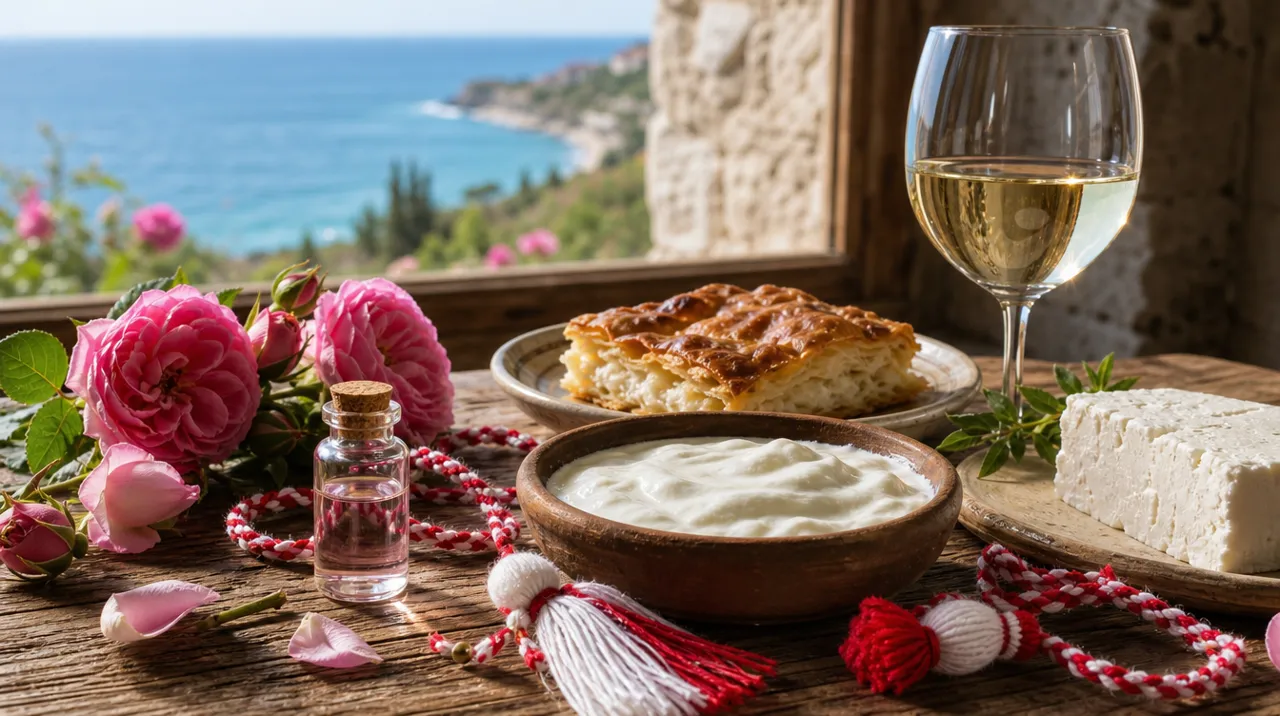
Bulgaria is famous for rose oil, yogurt, the world's oldest gold, the Cyrillic alphabet, nodding for 'no', martenitsa, banitsa, wine and the Black Sea.
Bulgaria is famous for rose oil, yogurt (the bacterium is called Lactobacillus bulgaricus), the world’s oldest processed gold, the Cyrillic alphabet and the habit of nodding to mean “no”. Add the red-and-white martenitsa, banitsa, shopska salad, rakia, wine, monasteries and the Black Sea coast. Many of these you can see, taste or buy in Varna in a single weekend.
The list below covers twelve of them with a concrete place in or near Varna. The other three are customs you will meet rather than visit.
Do Bulgarians really nod for “no”?
Yes. A single upward nod of the head, often with a click of the tongue, traditionally means “no”, and a side-to-side wobble can mean “yes”. Younger people in Varna and staff in tourist areas often switch to the international gestures, so when in doubt, ask for a clear “da” (yes) or “ne” (no).
Is the Cyrillic alphabet Bulgarian?
Cyrillic was created in the First Bulgarian Empire in the 9th century, most likely at the Preslav Literary School. When Bulgaria joined the EU in 2007, Cyrillic became the EU’s third official script. Every year on 24 May, a public holiday, Bulgaria celebrates Saints Cyril and Methodius, the alphabet and culture. In Varna you will read it on every street sign, so learning the letters in an evening pays off quickly.
What are kukeri and nestinari?
Kukeri are men in huge fur costumes, carved animal masks and heavy bells who dance through villages around New Year and before Lent to chase away evil spirits. Nestinari dance barefoot on glowing embers on 21 May, the day of Saints Constantine and Helena, in a few Strandzha villages in the south-east; the ritual has been on UNESCO’s intangible heritage list since 2009. Neither is a Varna tradition, so plan a trip if you want to see them live.
Why is Varna a good place to discover Bulgaria?
Varna mixes almost every theme on this list: the gold of the Varna Necropolis, the rock-cut Aladzha Monastery, a wine region on the coast and even the birthplace of shopska salad, created in the 1950s at a Black Sea resort near the city. Thracian, Greek and Roman layers sit right under the modern streets. Rila Monastery, the country’s most famous monastery, is far away in the south-west, about 117 km from Sofia, so treat it as a separate trip.
How to plan it
- Rainy day: start with the Archaeological Museum (€10) and walk 10 minutes to the Ethnographic Museum (€5). Both sell tickets only at the door.
- Food morning: banitsa and yogurt for breakfast, then sirene and honey at Kolhozen pazar.
- Afternoon out: Aladzha Monastery (closed December to February) or a tasting at Varna Winery, booked in advance.
- Souvenirs: rose oil and rose cosmetics, a bottle of local white wine, and a martenitsa if you visit in late February or March.
Bulgaria uses the euro since 1 January 2026; small market stalls often prefer cash.
Sources
- Regional Museum of History Varna
- Regional Museum of History Varna – Ethnographic Museum
- Regional Museum of History Varna – Prices and tickets
- Regional Museum of History Varna – Aladzha Monastery
- BTA – Martenitsa, a centuries-old spring tradition
- UNESCO – Cultural practices associated to the 1st of March
- Cosmetics Bulgaria – About us
- Varna Winery
- Wikipedia – Lactobacillus delbrueckii subsp. bulgaricus
- Wikipedia – Shopska salad
- Wikipedia – Cyrillic script
- Wikipedia – Nod (gesture)
- Wikipedia – Anastenaria (Nestinarstvo)
- Wikipedia – Kukeri
- Wikipedia – Rila Monastery
The list 12
✨ Picked for the current time and weather in Varna
Varna gold – Varna Archaeological Museum✨ Good right now
The Varna Necropolis gold (c. 4600–4200 BC) is the oldest processed gold treasure found anywhere. See it in the museum's main halls; from October to April the museum is closed on Sundays and Mondays.
Best for: History lovers, rainy days, first-time visitors
Bulgarian rose oil – Cosmetics Bulgaria shop✨ Good right now
Bulgarian rose oil is distilled from Rosa damascena grown in the Rose Valley around Kazanlak. This shop in the Greek Quarter sells rose oil and rose cosmetics from Bulgarian brands and lets you try products before buying.
Best for: Souvenir hunters, gifts
17 Graf Ignatiev St, next to Sv. Atanasiy church↗ WebsiteBulgarian yogurt (kiselo mlyako)✨ Good right now
Bulgarian yogurt is fermented with Lactobacillus bulgaricus, the bacterium a Bulgarian doctor identified in 1905. Buy a plain tub in any Varna grocery and eat it with honey, in tarator soup or with banitsa.
Best for: Breakfast, budget travellers
Sirene and kashkaval – Kolhozen pazar✨ Good right now
Sirene is Bulgaria's white brined cheese and kashkaval its yellow cheese. At Varna's central outdoor market you can taste and buy both by weight, along with honey and seasonal fruit.
Best for: Food lovers, self-caterers, newcomers
Between Dr. Piskyuliev, Drin and Angel Kanchev streets↗ WebsiteBanitsa✨ Good right now
Banitsa is a filo pastry baked with eggs, yogurt and white cheese, the classic Bulgarian breakfast. Get a warm slice from a neighbourhood bakery with ayran or boza.
Best for: Breakfast, a cheap snack
Shopska salad✨ Good right now
Shopska is tomatoes, cucumber, peppers and onion under a snow of grated sirene, and it was created in the 1950s at a Black Sea resort near Varna. Order it in any Bulgarian restaurant, ideally with a small rakia.
Best for: Lunch and dinner, first taste of Bulgaria
Wine – Varna Winery✨ Good right now
Bulgaria grows local grapes such as the red Mavrud and the white Dimyat, and the Varna coast is known for whites. Varna Winery near the sea has its own vineyards, a tasting room and a shop; book tastings by email in advance.
Best for: Couples, small groups, wine lovers
Rakia✨ Good right now
Rakia is Bulgaria's fruit brandy, usually made from grapes, plums or apricots and normally around 40% ABV. It is usually sipped slowly with a salad before the main course.
Best for: Dinner with friends
Martenitsa and Baba Marta✨ Good right now
A martenitsa is a red-and-white yarn charm Bulgarians give each other on 1 March for health and the start of spring. Wear it until you see a stork, a swallow or a blossoming tree, then tie it to a branch.
Best for: Visitors in early spring, gifts
Folk costumes and crafts – Ethnographic Museum✨ Good right now
This museum in the Greek Quarter shows folk costumes of the Varna region, fishing, beekeeping and vine-growing tools. The museum's site lists weekday-only opening from October to May, so check before you go.
Best for: Culture lovers, families, rainy days
Monasteries – Aladzha Monastery✨ Good right now
Bulgaria is known for its Orthodox monasteries, led by Rila Monastery, a UNESCO site. Near Varna, Aladzha is a medieval rock monastery carved into a cliff above the coast; open daily May to October, closed December to February.
Best for: History, nature walks, photographers
The Black Sea coast – Sea Garden and Central Beach✨ Good right now
The Black Sea coast is Bulgaria's summer magnet, and Varna is its largest city. Walk through the Sea Garden to the Central Beach for a swim in summer or a long seafront walk the rest of the year.
Best for: Everyone, sunrise lovers, families
Frequently asked questions
What is Bulgaria most famous for?
Rose oil from the Rose Valley, yogurt, the Varna gold (the world's oldest processed gold), the Cyrillic alphabet, nodding for 'no', the martenitsa, banitsa, shopska salad, rakia, wine and the Black Sea coast.
Why is Bulgaria famous for yogurt?
In 1905 the Bulgarian doctor Stamen Grigorov identified the bacterium that turns milk into yogurt, and it was named after the country: Lactobacillus bulgaricus. Plain kiselo mlyako is still eaten daily.
Why is Bulgaria famous for roses?
The Rose Valley around Kazanlak grows Rosa damascena for rose oil, and Bulgaria is one of the world's main producers. A very large weight of petals is needed for a small amount of oil.
What is the famous Bulgarian cheese?
Sirene, a white brined cheese (EU protected designation of origin since 2023), used in shopska salad and banitsa. The yellow cheese kashkaval is the other everyday favourite.


