
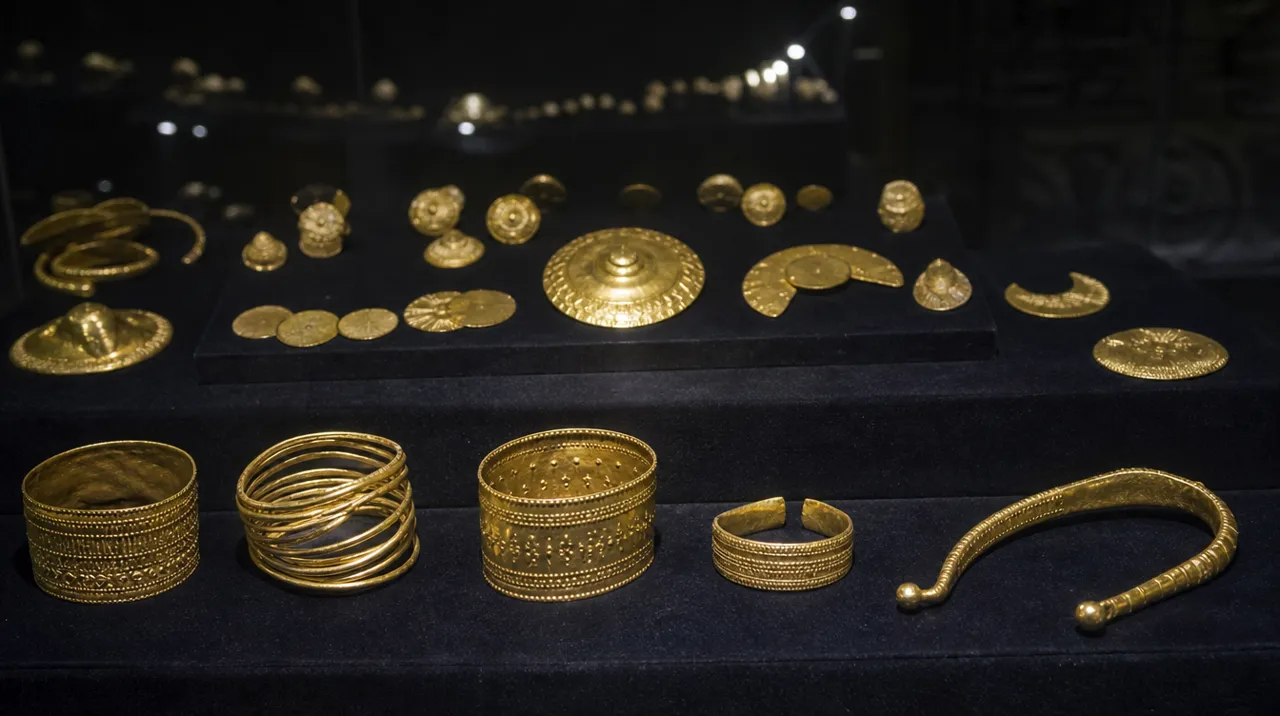
Varna Necropolis: the oldest processed gold in the world
Found by chance in 1972, the Varna Necropolis held some 3,000 gold objects from about 4600–4200 BC — the oldest worked gold treasure known anywhere.
The Varna Necropolis is a prehistoric cemetery on the western edge of Varna that contained the oldest worked gold treasure yet found anywhere in the world. Its roughly 3,000 gold objects date to about 4600–4200 BC — older than the pyramids of Egypt — and most are displayed in the Varna Archaeological Museum.
How was it discovered?
In October 1972 an excavator operator, Raycho Marinov, was working on a site in the western industrial zone, about 4 km from the centre, when he struck graves filled with gold, copper and flint objects. Archaeologists Mihail Lazarov and Ivan Ivanov took over the site; Ivanov led the excavations until 1991. These details follow the Wikipedia article on the Varna Necropolis.
What was found?
| Graves | 294 excavated |
| Gold objects | about 3,000 |
| Total weight of gold | roughly 6 kg |
| Date | graves radiocarbon-dated (2006) to 4569–4340 BC |
The finds include gold bracelets, beads, rings, diadems and sceptres, along with copper tools, flint and obsidian blades, Spondylus shells and about 600 pottery pieces. Some graves were symbolic cenotaphs with no skeleton — and these were the richest in gold.
How precisely has the cemetery been dated?
The most detailed dating so far is a 2018 study in the journal Radiocarbon by Thomas Higham, Vladimir Slavchev, Bisserka Gaydarska and John Chapman. They published 71 radiocarbon (AMS) dates from 53 graves, up from a first series of 14, and corrected some of the human dates for a small marine reservoir effect that they detected with carbon and nitrogen isotopes. According to their preferred model, the first burials took place in 4596–4516 BC and the last in 4427–4341 BC. The cemetery was therefore in use for only about 120–260 years, at the start of the Late Copper Age in Bulgaria.
Why is grave 43 famous?
Grave 43 held more gold than had been found at any other site of that period in the world. The man buried there was first thought to be a ruler; researchers now suggest he may have been a metalsmith. His burial shows that a sharply ranked society existed on the Black Sea coast in the Copper Age.
Why does it matter?
The necropolis changed how archaeologists understand early Europe. It shows that people around ancient Lake Varna mastered gold metallurgy and long-distance trade far earlier than once believed, and that a clearly ranked society had already formed here in the 5th millennium BC.
How to see the gold
The Varna Archaeological Museum (41 Maria Luisa Blvd), founded in 1888 and housed in a 19th-century former girls’ school, displays the main collection. Check opening hours locally before you go.
Current tickets and winter closing days for the Archaeological Museum are in our Varna museums hours and prices table, and the museum is one of our top 10 sights in Varna.
Continue with Varna’s history from Odessos to today.
To see the gold itself, read the Varna Archaeological Museum and the oldest gold on our sister site Varna Now.
Sources
Frequently asked questions
How old is the Varna gold?
The gold dates to about 4600–4200 BC, more than 6,000 years ago, which makes it the oldest processed gold treasure known in the world.
Where can I see the Varna Necropolis gold?
The main collection is in the Varna Archaeological Museum at 41 Maria Luisa Boulevard; some finds are in the National Historical Museum in Sofia.
Can you visit the necropolis site itself?
The burial ground lies in Varna's western industrial zone and is not set up as a visitor attraction; the museum is the place to see the finds.


