Why Bulgaria has historic ties to Russia: 1878, 3 March and Soviet monuments
Bulgaria's ties to Russia go back to the 1877–78 war that ended Ottoman rule, marked on 3 March. Bulgaria was never in the USSR. The monuments debate.
Bulgaria’s ties to Russia date mainly from the Russo-Turkish War of 1877–78, which ended almost 500 years of Ottoman rule and led to the restored Bulgarian state. The peace treaty signed at San Stefano on 3 March 1878 is why 3 March is the national holiday. Bulgaria was never part of Russia or the Soviet Union, and today Bulgarians disagree about how Soviet-era symbols should be remembered.
As of October 2026. This page explains history; it does not take sides.
What happened in 1878?
Russia declared war on the Ottoman Empire in 1877. According to Radio Bulgaria (BNR), 66,130 Russian soldiers died in the war (estimates of Russian losses vary between sources), and Bulgarian volunteers fought alongside them. The Treaty of San Stefano (3 March 1878, 19 February Old Style) created a large autonomous Bulgaria, but the great powers revised it at the Congress of Berlin: the Treaty of Berlin of 13 July 1878 left a much smaller principality. Russian troops entered Varna on 27 July 1878, BTA notes. Bulgaria declared full independence in Tarnovo on 5 October 1908.
Why is 3 March the national holiday?
The day marks San Stefano. BNT writes that it was first honoured in 1880, became the Day of Liberation in 1888, was declared a national holiday in 1978 and was added to official public holidays by a parliamentary decision in 1990 — so you may see either 1978 or 1990 given as the start. See our sister site’s Bulgarian public holidays.
Why do many Bulgarians feel close to Russia?
Reference works list several reasons: gratitude for 1878, the shared Orthodox faith, closely related Slavic languages and the Cyrillic alphabet, which was created in medieval Bulgaria and later adopted in Russia (see our Cyrillic guide). Relations were not always warm, though: Bulgaria fought on the opposite side to Russia in the First World War and joined the Axis in 1941.
Was Bulgaria part of the USSR?
No. The Soviet Union declared war on Bulgaria on 5 September 1944 and the Red Army entered days later. A communist People’s Republic followed in September 1946; it was a close Soviet ally and a founding member of the Warsaw Pact (1955), but a separate state. The regime even asked to join the USSR in 1963 and 1973, a request whose sincerity historians question. Todor Zhivkov was removed from power on 10 November 1989, which opened the way to multi-party elections in 1990.
What is the Soviet monuments debate?
Supporters of the monuments see them as gratitude and heritage; opponents see symbols of Soviet domination. In Sofia, dismantling of the Monument to the Soviet Army (1954) began on 12 December 2023. In Plovdiv, PP–DB councillors proposed in January 2024 removing “Alyosha” (1957), calling it “not part of the cultural tradition and collective memory of Plovdiv”, RFE/RL reported. Mayor Kostadin Dimitrov said removal was not a priority, and on 16 January 2024 Russia’s State Duma condemned the proposal, TASS reported. For present-day relations and polls, see Is Bulgaria pro-Russian?.
What it means for visitors in Varna
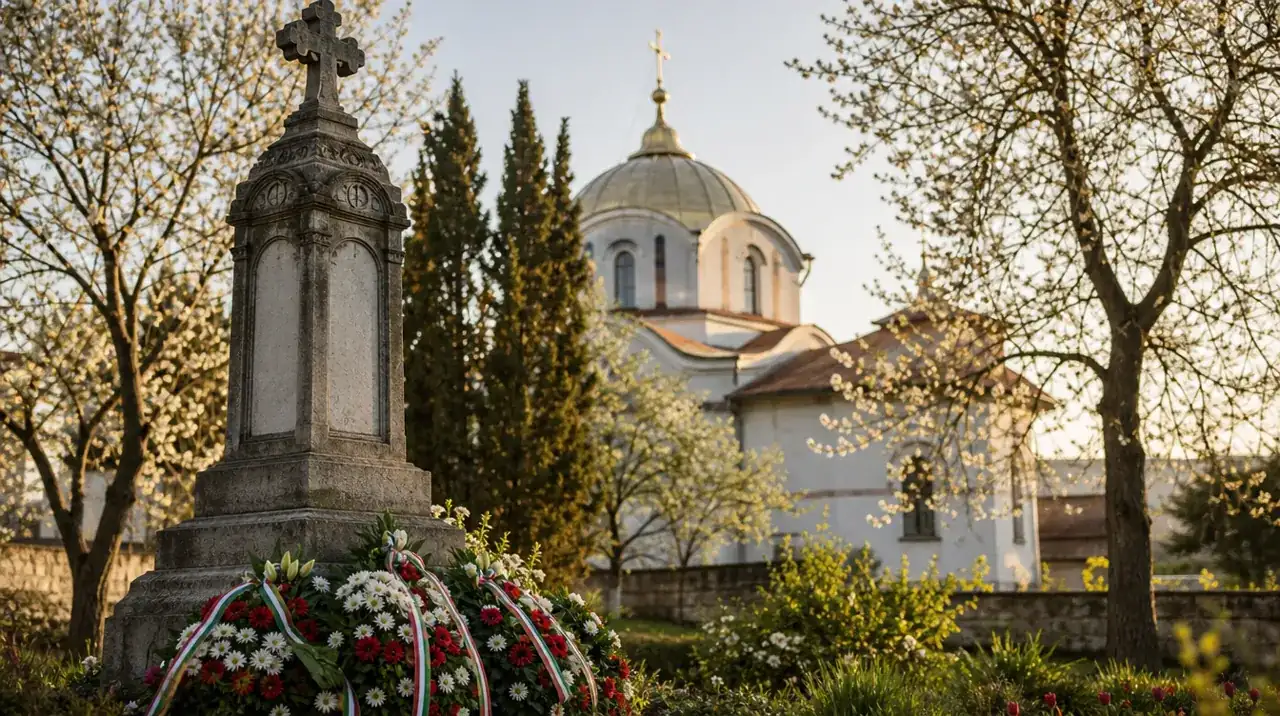
Each 27 July, Varna marks its liberation with a wreath-laying at the monument in the courtyard of the St Archangel Michael Spiritual and Educational Centre, where locals greeted Russian troops in 1878, BTA reported. Nationwide, BNR counts more than 400 memorials to the war. For the wider story, read Varna’s history and the Battle of Varna 1444.
Sources
- Treaty of San Stefano – Wikipedia
- Bulgarian Declaration of Independence – Wikipedia
- BNT (3 March, 3 Mar 2019)
- Radio Bulgaria / BNR (memorials of the 1877–78 war, 3 Mar 2024)
- BTA (Varna marks 148 years since liberation, 27 Jul 2026)
- Bulgaria–Russia relations – Wikipedia
- People's Republic of Bulgaria – Wikipedia
- Warsaw Pact – Wikipedia
- Monument to the Soviet Army, Sofia – Wikipedia
- BTA (Sofia begins dismantling Soviet Army monument, 12 Dec 2023)
- RFE/RL (uncertain future of Sofia's Soviet Army monument)
- RFE/RL (Alyosha debate in Plovdiv, 17 Jan 2024)
- TASS (State Duma statement, 16 Jan 2024)
Frequently asked questions
Why do many Bulgarians feel close to Russia?
Reference works point to the 1877–78 war that ended Ottoman rule, a shared Orthodox faith, closely related Slavic languages and the Cyrillic alphabet, which spread to Russia from medieval Bulgaria, plus four decades of close Soviet-era ties. Views today differ, as the debate over Soviet-era monuments shows.
Why is 3 March Bulgaria's national holiday?
It marks the Treaty of San Stefano, signed on 3 March 1878, which ended the Russo-Turkish War and restored a Bulgarian state. BNT notes it was declared a national holiday in 1978 and added to the official public holidays by a parliamentary decision in 1990.
Was Bulgaria ever part of Russia or the USSR?
No. Bulgaria was part of the Ottoman Empire until 1878, then a principality, independent kingdom from 1908 and, from 1946 to 1990, a separate communist state allied to Moscow in the Warsaw Pact, but never a Soviet republic.
What happened to the Soviet Army monument in Sofia?
Dismantling of the 1954 monument began on 12 December 2023. Officials first planned to show it at the Museum of Socialist Art, but the museum's director told RFE/RL this was not feasible for lack of space. We found no announcement of a permanent new site as of October 2026.
What is the Alyosha monument debate in Plovdiv?
In January 2024 councillors from the PP–DB coalition proposed removing the 1957 Soviet soldier statue; the mayor said it was not a priority, and Russia's State Duma condemned the idea, RFE/RL and TASS reported. We found no report of a decision to remove it as of October 2026.


