
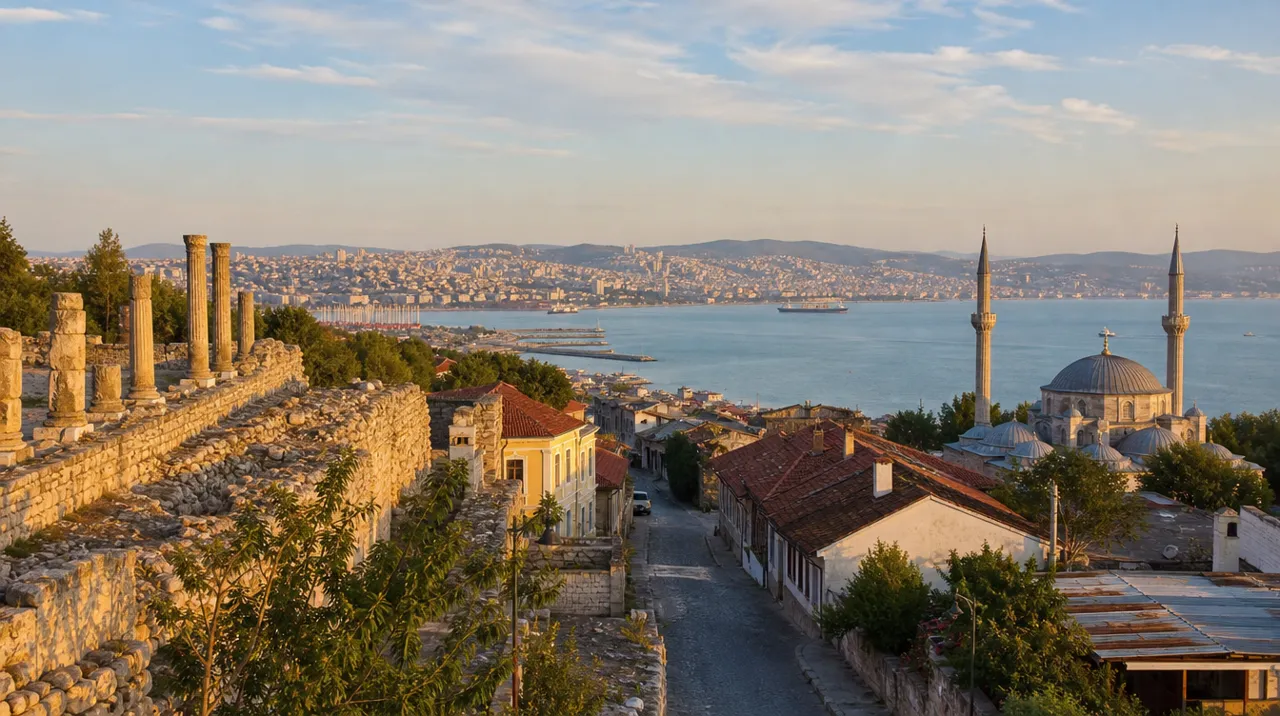
Varna's history: from Greek Odessos to Bulgaria's sea capital
Founded as Greek Odessos in the 6th century BC, Varna grew under Rome, saw the 1444 Battle of Varna, was Ottoman until 1878 and briefly named Stalin.
Varna’s written history begins with Odessos, a Greek trading colony founded in the 6th century BC, but people lived around Lake Varna thousands of years earlier, as the world-famous Varna Necropolis gold shows. Over 2,500 years the city passed from Greeks to Romans, Byzantines, Bulgarians and Ottomans before becoming the modern port city of today.
Odessos and the Romans
Greek settlers from Miletus founded Odessos in the second quarter of the 6th century BC (about 585–550 BC) on the site of a Thracian settlement. Under Rome, Odessus became an important port. Its Roman Thermae, built in the late 2nd century AD, cover about 7,000 m² — the largest Roman baths in the Balkans and the fourth largest known in Europe. Their ruins still stand in the old town, at San Stefano and Han Krum streets.
Medieval Varna and the 1444 battle
The Bulgar ruler Asparuh reached the area in 681, and the city later belonged to the Bulgarian and Byzantine states. On 10 November 1444, outside the city walls, an Ottoman army under Murad II defeated a crusader army led by King Władysław III of Poland and Hungary, who died on the battlefield. The Battle of Varna sealed Ottoman control of the region.
The Ottoman centuries
Under Ottoman rule Varna was a major port and centre of trade, farming and shipbuilding, and became one of the four fortresses of the “Quadrilateral” defending the Danube lands.
A Bulgarian port city
Russian troops entered Varna on 27 July 1878, and the city became part of the new Bulgarian state. Landmarks of that era include the Cathedral of the Dormition (1880–1886) and the Sea Garden, laid out by Czech gardener Anton Novák from 1895. The Varna Summer music festival began in 1926.
The 20th century to today
From 1949 to 1956 the city was officially named Stalin. In 1976 the Asparuhov Bridge opened over the canal to Lake Varna. Today Varna is Bulgaria’s third-largest city, a university town and its biggest port, and it was European Youth Capital in 2017.
Where can you see this history today?
Read where the crusaders fell in the Battle of Varna 1444, walk Anton Novák’s Sea Garden, and check museum hours and prices before visiting the Roman Thermae and the Archaeological Museum.
Sources
Frequently asked questions
What was Varna's ancient name?
Odessos (Odessus in Latin). Greek colonists from Miletus founded it in the 6th century BC on the site of an earlier Thracian settlement.
What happened at the Battle of Varna?
On 10 November 1444 an Ottoman army under Sultan Murad II defeated a crusader army; King Władysław III of Poland and Hungary was killed in the battle.
Was Varna ever called Stalin?
Yes. From 20 December 1949 to 20 October 1956 the city was officially named Stalin, then its historic name was restored.


