Is Bulgaria in NATO and the EU? Membership dates and timeline
Yes: Bulgaria joined NATO on 29 March 2004 and the EU on 1 January 2007, then Schengen (2024–25) and the euro (2026). A membership timeline since 1878.
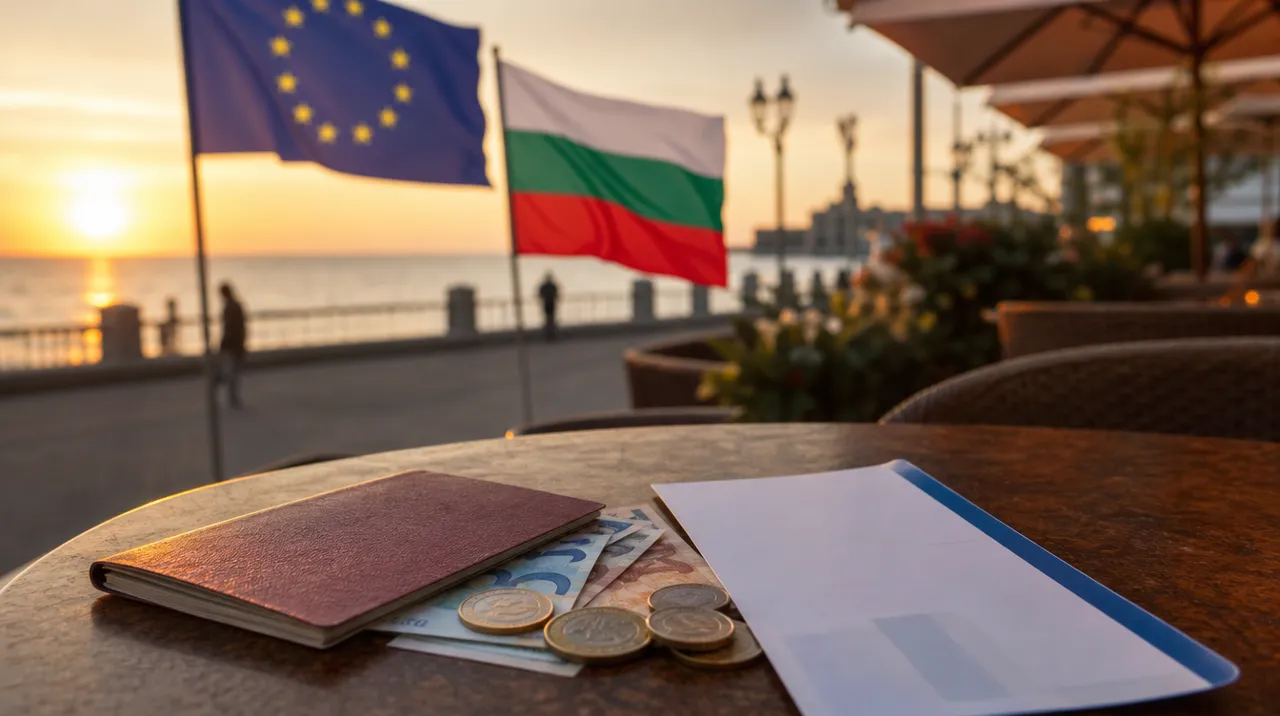
Yes – Bulgaria is in all four. It joined NATO on 29 March 2004 and the European Union on 1 January 2007, became a full Schengen member on 1 January 2025 and adopted the euro on 1 January 2026, according to NATO, the EU and the ECB. For visitors, that means EU rules, no checks at Schengen land borders and prices in euros.
When did Bulgaria join NATO, the EU, Schengen and the euro?
| Year | What happened |
|---|---|
| 1878 | Autonomous Principality of Bulgaria after the Russo-Turkish War, under nominal Ottoman suzerainty |
| 1908 | Independence proclaimed in Veliko Tarnovo (5 October) |
| 1946–1990 | People’s Republic of Bulgaria, one-party communist state; Warsaw Pact member from 1955 until it was dissolved in 1991 |
| 1989–1990 | Todor Zhivkov ousted (10 November 1989); country renamed Republic of Bulgaria (15 November 1990) |
| 2004 | Full NATO member on 29 March (NATO, BTA) |
| 2007 | EU member on 1 January |
| 2024–2025 | Schengen: air and sea checks lifted 31 March 2024, land borders 1 January 2025 (BNT) |
| 2026 | Euro on 1 January, after the EU adopted the final acts on 8 July 2025 (BTA) |
These are membership dates only. Who needs a visa, the 90-days-in-180 rule and EES registration at the border are explained in our visa and Schengen entry rules.
Was Bulgaria ever part of Russia or the USSR?
No. Russia’s role in the 1877–78 war that led to Bulgarian statehood is widely remembered, and after 1944 the country was a close Soviet ally. But the People’s Republic kept its own government, constitution and seat as a separate state; it was never a Soviet republic. The full story, from 1878 to the Soviet monuments, is in our Bulgaria and Russia history guide. Our guide to what Bulgaria is famous for gives more background, and Varna Pulse explains how Bulgaria relates to Russia today.
Why does Bulgaria have the euro but Romania doesn’t?
Each country must meet the EU’s convergence criteria. In its June 2026 convergence report the ECB found Romania’s average inflation at 8.4% against a 2.7% reference value and its 2025 budget deficit at 7.9% of GDP, and the leu is not in the ERM II exchange-rate mechanism. Bulgaria’s lev, by contrast, had been fixed to the euro since 1999 under a currency board and joined ERM II in July 2020.
What does it mean for visitors and residents in Varna?
- Money: pay in euros; see our Bulgaria currency guide.
- Borders: no passport checks between Romania and Bulgaria, but entry rules for non-EU citizens still apply – see visa and Schengen rules.
- NATO: Varna is home to the headquarters of the Bulgarian Navy; read about US troops and the NATO battlegroup.
Sources
- NATO – Enlargement and Article 10 (2004 accession of seven countries)
- BTA – March 29, 2004: Bulgaria becomes full NATO member
- European Union – Bulgaria country profile
- BNT – Bulgaria becomes full Schengen member on 1 January 2025 (12 Dec 2024)
- BTA – Bulgaria clears last hurdle to eurozone entry (8 Jul 2025)
- European Central Bank – Bulgaria's changeover to the euro
- European Central Bank – Convergence Report, June 2026
- Wikipedia – Bulgarian Declaration of Independence
- Wikipedia – People's Republic of Bulgaria
- Wikipedia – Bulgaria and the euro
- Wikipedia – Warsaw Pact
Frequently asked questions
Is Bulgaria in NATO, and since when?
Yes. Bulgaria became a full NATO member on 29 March 2004, together with Estonia, Latvia, Lithuania, Romania, Slovakia and Slovenia, according to NATO.
When did Bulgaria join the EU?
On 1 January 2007, on the same day as Romania, according to the EU's official country profile.
Is Bulgaria fully in Schengen?
Yes, as of 2026-10. Checks at air and sea borders ended on 31 March 2024 and at internal land borders on 1 January 2025, after an EU Council decision of 12 December 2024 (BNT).
When did Bulgaria adopt the euro?
On 1 January 2026, at the fixed conversion rate of 1 € = 1.95583 leva, according to the European Central Bank.
Was Bulgaria ever part of the Soviet Union?
No. From 1946 to 1990 it was the People's Republic of Bulgaria, a separate state under communist rule and a member of the Soviet-led Warsaw Pact, but it never joined the USSR.


