
Driving in Bulgaria in winter: tyre rules, chains and mountain passes
From 15 November to 1 March, cars in Bulgaria need winter tyres or at least 4 mm of tread. Studs are banned; chains go on where signs or snow require.
From 15 November to 1 March, every car on Bulgarian roads must have winter tyres or tyres with at least 4 mm of tread. This applies to foreign-plated and rental cars too. Studded tyres are banned, and snow chains are used only when snow or a sign requires them. Rules as of October 2026.
What exactly does the law say?
Article 139 of the Road Traffic Act says that vehicles on the road must have “tyres designed for winter conditions, or tyres with a tread depth of not less than 4 mm” in the period 15 November – 1 March. Parliament voted the change on 24 November 2016, raising the winter minimum from 1.6 mm, as Sofia Globe reported; it took effect on 21 January 2017.
Some guides say winter tyres are needed only “in winter conditions”. The law text sets dates, not weather: the rule applies from 15 November even on a dry, sunny day. All-season or summer tyres are legal if they still have 4 mm of tread.
Are snow chains and studded tyres allowed?
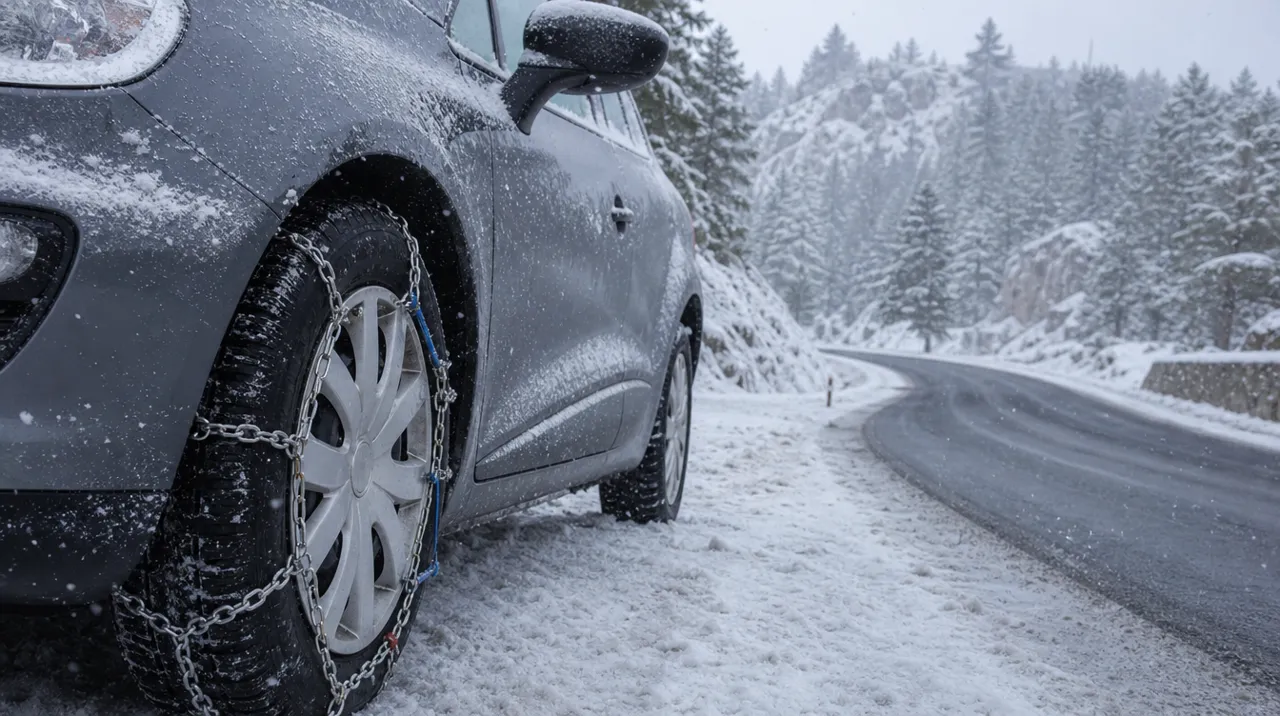
Article 9 of the same act bans studded tyres on public roads and allows snow chains only when road conditions require them. Where a road sign makes chains compulsory, you must fit them. In snowy spells the Road Infrastructure Agency (API) has restricted traffic on mountain routes such as the Prevala pass and the Pamporovo area, according to BNT.
Sources disagree on carrying chains: the AA and Continental advise having them in the car from 1 November to 31 March, while the Road Traffic Act itself only regulates their use. Carrying a set is the safe choice if you leave the coast.
What do police check, and what kit should I carry?
Every November the Interior Ministry starts a road-safety campaign called “Winter” (on 15 November in 2023, on 1 November in 2025, according to Sofia Globe). According to Sofia Globe, the 2023 edition included checks on drivers and vehicles, and police recommended carrying:
- snow chains, a blanket and a spade;
- a tow rope and a battery charger;
- antifreeze and winter screen-wash.
A first-aid kit, warning triangle, fire extinguisher and reflective vest are compulsory all year.
What it means if you drive from Varna
Varna and the coast have mild winters, so chains are rarely needed on coastal roads, although ice and the occasional snowstorm do happen. Inland routes are different: the drive to Veliko Tarnovo crosses hillier country, and the roads to the ski resorts of Bansko, Borovets and Pamporovo climb into the mountains. Before setting off, check the API page api.bg or call 0700 13020 for current road conditions.
Arriving by car from Romania or Turkey? See driving to Varna for border crossings and the e-vignette. Hiring a car on arrival? Renting a car in Varna covers licences, deposits and what to check at pick-up, including the tyres.
Sources
- Road Traffic Act (ZDvP), Art. 9 and Art. 139 – lex.bg
- Sofia Globe – Parliament votes 4 mm minimum tread in winter (24 Nov 2016)
- Sofia Globe – Winter tyre reminder (14 Nov 2025)
- Sofia Globe – Bulgaria begins road safety Operation Winter (15 Nov 2023)
- BNT – Prevala and Pamporovo passes in snow (25 Jan 2019)
- Continental – Winter regulations in Europe
- The AA – Snow chains and winter tyres in Europe
- Road Infrastructure Agency (API) – current road conditions
Frequently asked questions
Are winter tyres compulsory in Bulgaria?
Not strictly. From 15 November to 1 March the Road Traffic Act requires winter tyres or tyres with at least 4 mm of tread, so all-season or summer tyres are legal if they meet the 4 mm minimum.
Does the 4 mm rule only apply when it snows?
No. The law sets a calendar period, 15 November to 1 March, with no weather condition attached, so it applies on dry days too.
Do foreign cars have to follow the rule?
Yes. The rule covers every vehicle driving on Bulgarian roads, whatever its number plate. Check the tyres on a rental car when you pick it up.
Do I need snow chains in Varna?
Rarely on the coast, but carry them if you head inland to the mountains or ski resorts. Fit them where a sign requires them or the road is snow-covered.


