Bulgarian customs and etiquette: what every Varna visitor should know
In Bulgaria a nod can mean no, name days count like birthdays and flowers come in odd numbers. The customs, holidays and table manners to know in Varna.
Bulgarian customs are friendly and easy to follow once you know five things: a nod can mean “no”, name days are celebrated like birthdays, you toast with “Наздраве!” while looking people in the eye, flowers are given in odd numbers (even numbers are for funerals) and shoes usually come off at the door. Get these right and you will feel at home in Varna.
Which customs trip visitors up most?
- Yes and no. The traditional gesture is the reverse of much of Europe. Many people in Varna switch for foreigners, so the confusion goes both ways: say “да” (da, yes) or “не” (ne, no).
- Name days. Most Bulgarian names belong to a saint’s day. On it, colleagues bring sweets, friends call and the home is open to visitors, even without an invitation.
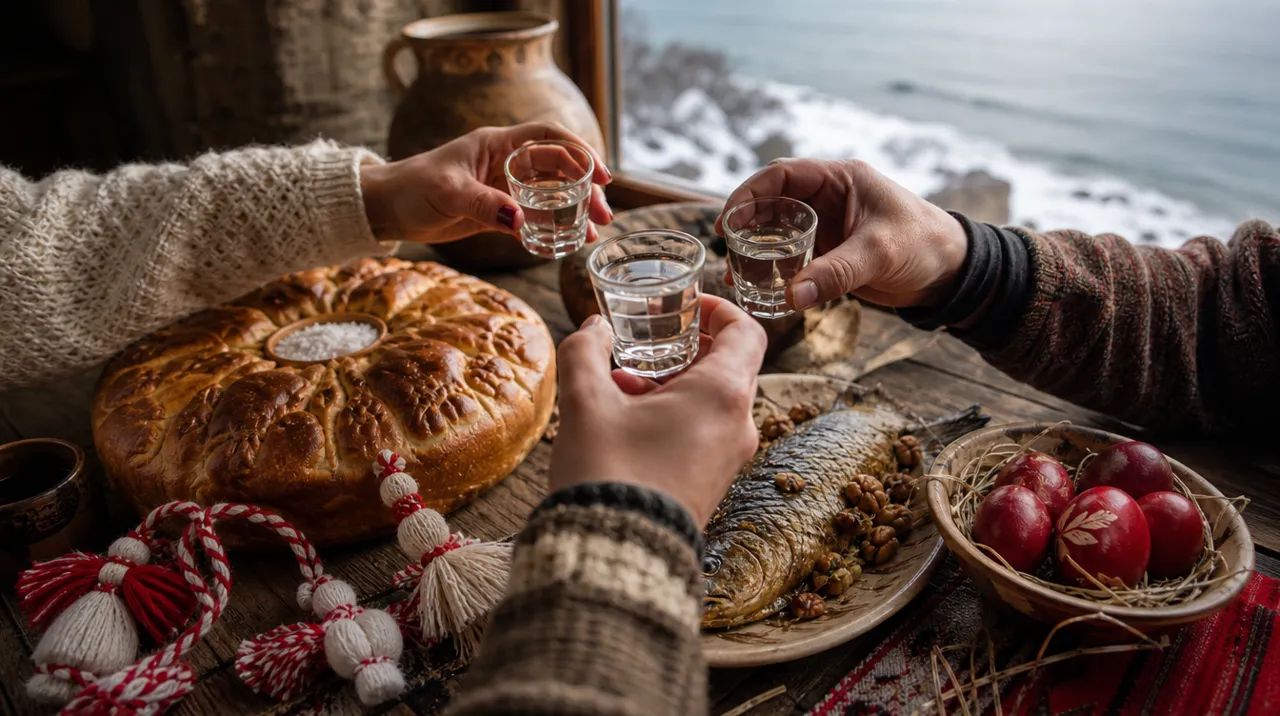
- Toasts. Raise your glass, look each person in the eye and say “Наздраве” (nazdrave). Glasses are refilled often, so leave a little if you have had enough.
- Flowers. Bring an odd number and avoid chrysanthemums and lilies, which are linked to funerals.
- Shoes. In many homes you take them off at the door; hosts often offer slippers.
How should I behave at the table, in church and in shops?
Shake hands and use titles until people invite you to first names. Wait to be seated, let the host or the eldest begin, and take a modest first helping so you can accept seconds. In restaurants a tip of 5–10% is normal if service was good (Wikivoyage). In Orthodox churches cover your shoulders and knees, speak quietly and buy a candle if you like. Prices in shops and restaurants are fixed; gentle bargaining is fine only at markets and with private sellers.
Which holidays and customs will I see during the year?
- Kukeri (around New Year and before Lent): masked dancers with bells chase away evil spirits.
- Baba Marta (1 March): red-and-white martenitsi on every wrist; in spring you will see them tied to trees.
- Easter: eggs are dyed – the first one red – and people tap them together; the egg that does not crack brings health.
- Nikulden (6 December): St Nicholas protects sailors and fishermen, so in a port city like Varna it is a big family day, with fish on the table.
- Christmas Eve (24 December): a meatless dinner with an odd number of dishes and a round bread that may hide a lucky coin.
What happens at a Bulgarian wedding?
Weddings are loud and generous. The couple is greeted with bread, the kum and kuma act as witnesses and godparents, and the long evening is carried by live music and horo dancing – join in when someone pulls you into the line. Looking for a place to celebrate? See our list of wedding venues in Varna.
What about the Turkish community?
Around 6% of people in Varna province identify as Turkish (Wikipedia), and in north-eastern Bulgaria the share is much higher. Many families celebrate Ramazan Bayram and Kurban Bayram with visits to relatives and shared meals; a friendly greeting is always welcome.
How can I see these traditions in Varna?
Visit the Ethnographic Museum in a 19th-century house in the old town, which shows the region’s crafts, fishing and costumes. Plan around the calendar: Nikulden and Christmas in December, martenitsi in March, Easter in spring. And when someone wishes you “Честит имен ден” in your office, now you know to bring the sweets.
For the full Christmas Eve table and the 24–26 December holidays, read Christmas in Bulgaria; for money, language and the emergency number, see practical basics for Varna.
Sources
- BTA – Martenitsa, Bulgarians celebrate spring
- Sofia Globe – Bulgaria's public holidays in 2026
- Varna Regional Museum of History – Ethnographic Museum
- Commisceo Global – Bulgaria culture and etiquette guide
- Wikipedia – Nod (gesture)
- Wikipedia – Name day
- Wikipedia – Martenitsa
- Wikipedia – Kukeri
- Wikipedia – Egg tapping
- Уикипедия – Никулден
- Уикипедия – Бъдни вечер
- Wikipedia – Turks in Bulgaria
Frequently asked questions
Do Bulgarians nod to say no?
Traditionally, yes: a nod can mean no and a side-to-side shake can mean yes, though many younger people and those used to foreigners use the international gestures. Say да (yes) or не (no) to be sure.
What is Baba Marta and the martenitsa?
On 1 March Bulgarians give each other red-and-white martenitsi for health. You wear one until you see a stork, a swallow or a blossoming tree, then tie it to a branch.
What are kukeri?
Kukeri are men in fur costumes, masks and heavy bells who dance around New Year and before Lent to chase away evil spirits and wish the village health and a good harvest.
What are the traditions and customs of Nikulden?
On 6 December Bulgarians honour St Nicholas, patron of sailors and fishermen, with a fish dish – classically carp stuffed with walnuts – and everyone named Nikolay, Nikola or Nikolina celebrates their name day.
What are the wedding traditions in Bulgaria?
Couples are welcomed with a round bread (pitka), choose a kum and kuma (best man and maid of honour) who act as godparents, and the party continues with horo chain dancing.


