
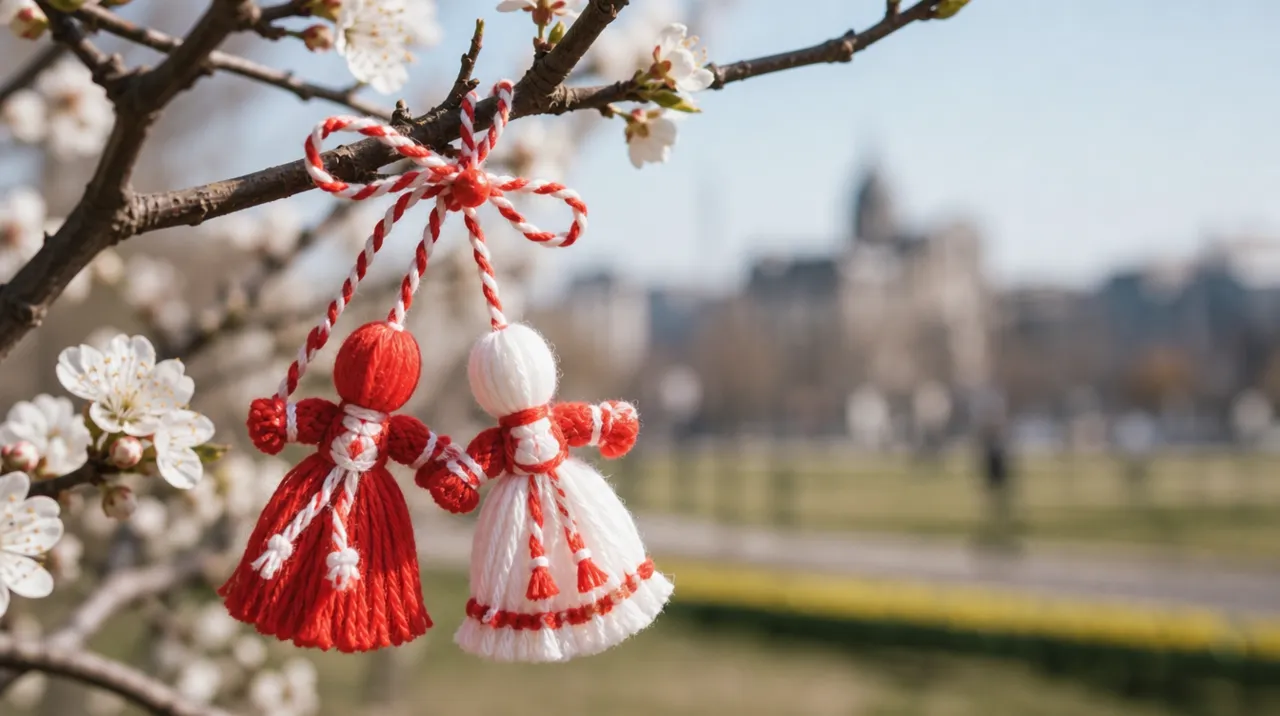
Baba Marta and martenitsi in Varna: meaning and where to buy
On 1 March Bulgarians give red-and-white martenitsi for health: what they mean, how to wear one, when to take it off and where to buy in Varna.
A martenitsa is a red-and-white charm that Bulgarians give each other on 1 March, Baba Marta Day, to wish health and a good year. You wear it on your wrist or pinned to your clothes until you see a stork, a swallow or a tree in blossom. In 2027, 1 March is a Monday; in Varna, stalls selling martenitsi fill the streets in the second half of February.
What does Baba Marta mean?
Baba Marta (“Grandma March”) is the folk figure who ends winter. BNT describes her as a grumpy old woman whose moods change fast, so the weather can be warm one day and cold the next. Giving martenitsi is meant to keep her in a good mood. According to BTA, the white thread stands for strength, long life and sunshine, and the red for health and fertility. The best-known form is a pair of little dolls called Pizho and Penda.
Is the martenitsa on UNESCO’s list?
Yes. In 2017 UNESCO added the “Cultural practices associated to the 1st of March” to its Representative List of the Intangible Cultural Heritage of Humanity, a joint nomination by Bulgaria, North Macedonia, Moldova and Romania.
How do you wear a martenitsa and when do you take it off?
- Who gets one: family, friends, colleagues and children; in some villages even houses and animals are decorated.
- Where: on the left wrist, around the neck or pinned to a coat.
- Until when: until you see the first stork or swallow, or a tree in blossom.
- Afterwards: tie it to a blossoming branch for luck. BNT notes that if the trees have already flowered, people put it under a stone instead.
By late March you will see trees in the Sea Garden and across Varna hung with faded red-and-white threads.
Where can you buy martenitsi in Varna?
From about mid-February, street stalls, market tables, kiosks, supermarkets and souvenir shops all sell them, from simple twisted threads to handmade pieces. Varna also has artisan versions: according to BTA, the Yuka gallery held its fifth annual exhibition of designer martenitsi in February 2024. For other gifts, see Bulgarian souvenirs: what to buy.
Are there charity martenitsi?
Yes. Schools, kindergartens and charities across Bulgaria make martenitsi and sell them at bazaars in late February; BTA, for example, covered a bazaar of handmade martenitsi from 25 Sofia schools and kindergartens on 1 March 2024. For similar sales in Varna, check local news and social media in February.
How is it different from the Romanian mărțișor?
In Romania the mărțișor is a small trinket hung on a red-and-white string and given mostly to women and girls on 1 March, often worn for the whole month. More on local manners in Bulgarian customs and etiquette.
Sources
- UNESCO – Cultural practices associated to the 1st of March
- UNESCO – Nomination file 01287 (PDF)
- BTA – Martenitsa: Bulgarians celebrate spring with a centuries-old tradition
- BNT – The Bulgarian tradition of Baba Marta and the martenitsa on March 1
- BTA – Varna: exhibition of artisan martenitsi at Yuka gallery (21 Feb 2024)
- BTA – Charity bazaar of handmade martenitsi at the Ministry of Education (1 Mar 2024)
- Wikipedia (Romanian) – Mărțișor
Frequently asked questions
What does a martenitsa mean?
It is a red-and-white charm given on 1 March to wish the wearer health and a good year. According to BTA, white stands for strength and long life and red for health and fertility.
When do you take off a martenitsa?
When you see the first stork or swallow of spring, or a tree in blossom. Then you tie it to a blossoming branch; if the trees have already flowered, you can put it under a stone.
Can foreigners wear a martenitsa?
Yes. Bulgarians happily give them to visitors, colleagues and neighbours, and wearing one is seen as a friendly gesture.
Is 1 March a public holiday in Bulgaria?
No. Baba Marta is a folk custom and people work as usual. The public holiday is Liberation Day on 3 March, which falls on a Wednesday in 2027.
Is the martenitsa the same as the Romanian mărțișor?
They are related. Both belong to the 1 March practices UNESCO listed in 2017, but in Romania the mărțișor is a small trinket on a red-and-white string, given mostly to women.


